Fibroid Treatment
Fibroids are benign and many only need monitoring. If they cause symptoms: medication, or hysteroscopic or laparoscopic removal.
Written and medically reviewed by Op. Dr. Özlem Aras, Obstetrics & Gynecology Specialist

What Are Fibroids?
A fibroid (myoma) is a benign growth that develops from the muscle layer of the uterus. It is the most common tumor of the uterus in women of reproductive age, and many women develop fibroids at some point in their lives.
The most important fact comes first: fibroids are not cancer, and turning into cancer is extremely rare. Finding a fibroid does not by itself mean you need surgery. Most fibroids cause no symptoms and only need monitoring.
What Causes Fibroids?
The exact cause is not fully known, but several factors are known to play a role:
Types of Fibroids: Location Determines Symptoms
Where a fibroid sits matters more than its size in determining symptoms. This is the point patients find most confusing: a small fibroid in a bad location can cause far more problems than a large, silent one.
What Are the Symptoms?
Most fibroids cause no symptoms and are found by chance on a routine ultrasound. When they do cause symptoms, the most common are:
None of these symptoms are specific to fibroids. The same complaints are also seen with adenomyosis, endometriosis and ovarian cysts. The diagnosis is made by ultrasound.
How Is It Diagnosed?
For fibroids that cause no symptoms, the only thing needed is regular ultrasound checks. The decision to treat is based not on size but on symptoms and how fast the fibroid is growing.
Treatment Options
Your treatment plan is personalized based on how severe your symptoms are, the location and size of the fibroid, your age, whether you want children and how close you are to menopause. Having a fibroid is not in itself a reason for treatment.
1. Monitoring
Monitoring is preferred for fibroids that cause no symptoms. Growth is followed with regular ultrasounds. For women approaching menopause, monitoring makes even more sense, because fibroids are expected to shrink on their own.
2. Medication
Medication does not remove the fibroid; it controls the symptoms. This includes options to reduce heavy bleeding, hormonal treatments and iron supplements for anemia. For fibroids that do not distort the uterine cavity, a hormonal IUD can be used to reduce bleeding.
Which medicine is suitable varies from person to person and is decided by your doctor, which is why no drug names are given here.
3. Hysteroscopic Myomectomy
Submucosal fibroids that grow into the uterine cavity are removed with a camera passed through the cervix. There is no incision on the abdomen. It is an effective method for heavy bleeding and difficulty getting pregnant, with a quick recovery.
4. Laparoscopic Myomectomy
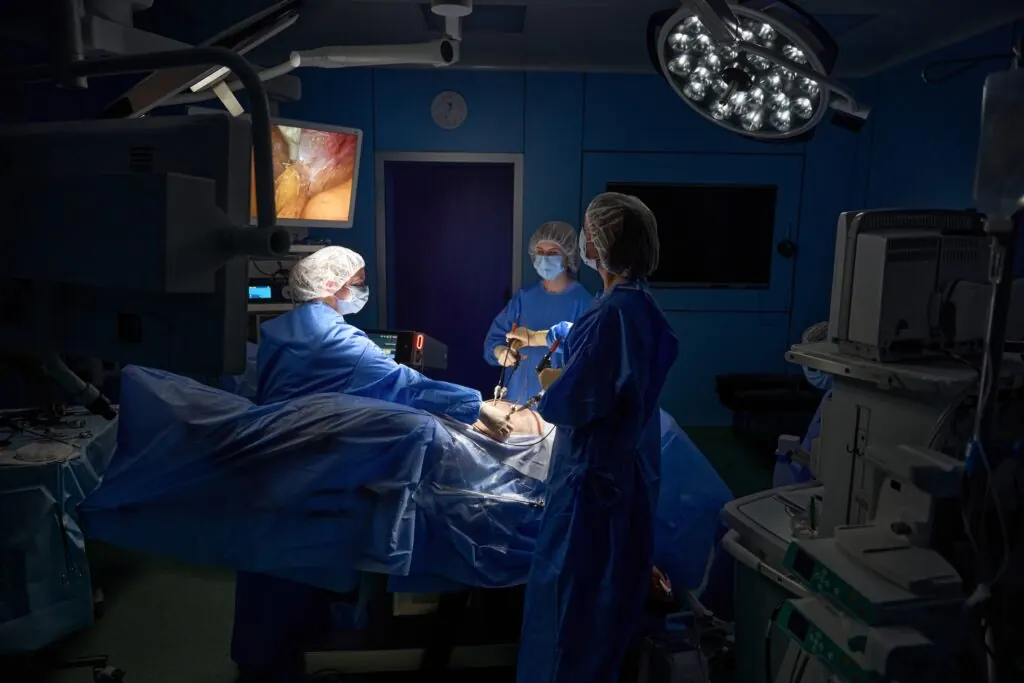
The fibroid is removed through a few small incisions in the abdomen, and the uterus is preserved. This is the preferred method for women who want children or want to keep their uterus. For details, see our laparoscopic surgery page.
You should know that fibroids can come back after myomectomy. This is not a failure; it is the nature of the condition.
5. Open Myomectomy
If there are very many fibroids, if they are very large or if they are in a difficult location, open surgery may be preferred.
6. Hysterectomy (Removal of the Uterus)
Hysterectomy removes the whole uterus and is the definitive solution for fibroids. However, it is the last step, not the first. It is considered for women who have finished having children and whose symptoms cannot be controlled with other methods.
When surgery is recommended to you, ask: "Is an option that preserves my uterus possible in my case?"
Fibroids and Pregnancy
Most fibroids do not prevent pregnancy. However, fibroids that distort the uterine cavity can make it harder for an embryo to implant and can lead to repeated pregnancy loss.
During pregnancy, fibroids can grow because of hormonal effects, and some undergo degeneration, which causes pain. As a rule, fibroid surgery is not performed during pregnancy. The location and size of the fibroid are taken into account when deciding how you will give birth.
If you are planning a pregnancy, assessing the location of the fibroid is more important than its size.
What Determines the Cost?
Turkish health regulations do not allow prices for medical services to be shared through advertising. The scope of care you need also cannot be known before an examination and ultrasound, because the same condition may be managed with monitoring, medication or surgery.
The cost depends on: the initial consultation and ultrasound, advanced imaging such as SIS or MRI if needed, blood tests and follow-up ultrasounds if monitoring is chosen. If surgery is needed, it also depends on preoperative preparation, the method used (hysteroscopic, laparoscopic or open), the type of anesthesia, the length of the hospital stay, pathology testing of the removed tissue and later follow-up visits.
When Should You See a Doctor?
Medical Author & Reviewer: Op. Dr. Özlem Aras (Obstetrics & Gynecology Specialist)
Medical disclaimer: The information on this page is for informational purposes only and does not constitute medical advice. Please consult a healthcare professional for diagnosis and treatment.
We'll Call You
Reach us quickly on WhatsApp