Colposcopy
A magnified look at the cervix after an abnormal smear or HPV test, with a biopsy if needed. The device stays outside the body.
Written and medically reviewed by Op. Dr. Özlem Aras, Obstetrics & Gynecology Specialist
What Is Colposcopy?
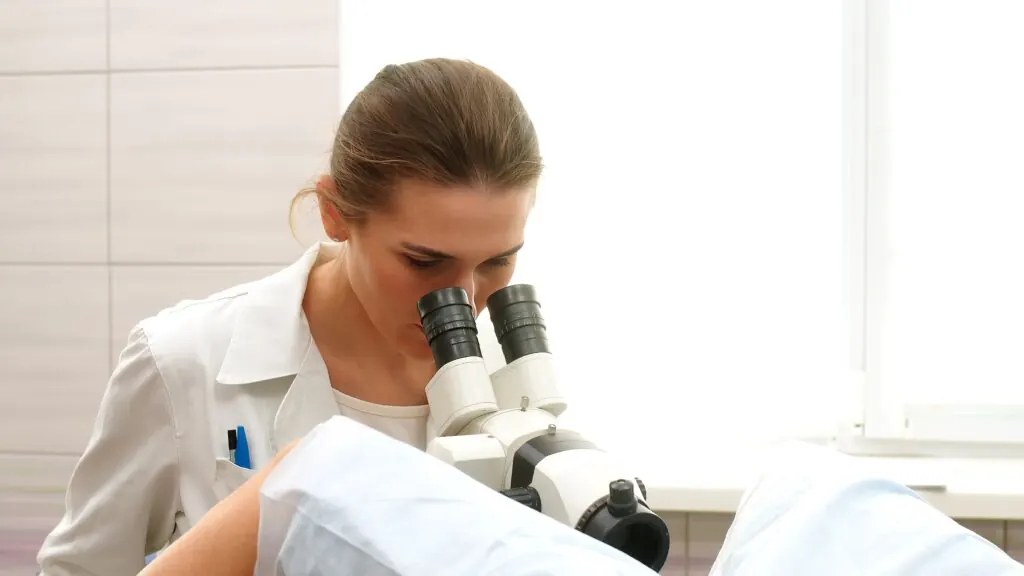
Colposcopy is a detailed examination of the cervix using a colposcope, a magnifying device with a bright light. The device does not go inside the body. It works from outside, like a microscope.
Colposcopy is not a screening test. Screening (the smear and HPV tests) points to a change. Colposcopy lets the doctor see where that change is and, if needed, take a tissue sample from it.
Why Is Colposcopy Done?
For more on screening tests, see our HPV and smear test page.
How Is It Done?
Colposcopy is very similar to a routine gynecological examination:
How Long Does It Take, and Does It Hurt?
The examination usually takes 10 to 20 minutes. A biopsy adds a few minutes.
Colposcopy itself does not usually hurt, although you may feel mild stinging when the solution is applied. If a biopsy is taken, you will feel a brief pinch or a cramp like a period cramp, lasting a few seconds. Mild cramping can continue for a few days afterward.
Anesthesia is usually not needed. If you are worried, you can talk to your doctor about taking a painkiller beforehand. You can return to your daily routine after the procedure, and you do not need anyone to accompany you.
Before the Procedure
Aftercare
If only the examination was done, there are no special restrictions. The iodine solution can cause dark discharge for a few days.
If a biopsy was taken, for a few days:
Light bleeding for a few days after a biopsy is normal, as is dark discharge that looks like coffee grounds.
Seek care promptly if you have bleeding heavier than a period or large clots, fever, foul-smelling discharge, severe pelvic pain that does not ease, or bleeding that lasts more than a week.
Results
There are two separate results, and they should not be confused:
None of the terms CIN 1, CIN 2 and CIN 3 (cervical intraepithelial neoplasia) on a pathology report is a cancer diagnosis. They are stages of precancerous change, and finding them at this stage is exactly what screening is for. Most CIN 1 goes away on its own and is monitored. CIN 3 is usually removed with a procedure such as LEEP.
A report may say "unsatisfactory colposcopy". This is not a bad result. It means the whole of a key area called the transformation zone could not be seen, which is common after menopause, and further assessment will be planned.
What Determines the Cost?
Turkish health regulations do not allow prices for medical services to be advertised. The scope also cannot be known before an examination, since whether a biopsy is needed only becomes clear during the procedure.
The cost depends on: the initial consultation, the colposcopic examination itself, whether biopsies are taken and how many, pathology examination of the tissue, whether a separate sample from the cervical canal is needed, and the follow-up visit after the results.
When to See a Doctor
Medical Author & Reviewer: Op. Dr. Özlem Aras (Obstetrics & Gynecology Specialist)
Medical disclaimer: The information on this page is for informational purposes only and does not constitute medical advice. Please consult a healthcare professional for diagnosis and treatment.
We'll Call You
Reach us quickly on WhatsApp