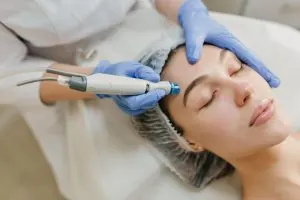
Pigmentation Treatment
Melasma, sun spots and post-inflammatory marks need different treatment, and none lasts without daily sun protection.
Written and medically reviewed by Op. Dr. Özlem Aras, Obstetrics & Gynecology Specialist

Why Do Skin Spots Form?
Skin spots appear when the cells that make the skin's pigment (melanin) work too hard and unevenly. The two strongest triggers for these cells are the sun and hormones.
This shapes the whole treatment. What matters most in pigmentation treatment is not the method used but whether the cause of the spots has been removed. No pigmentation treatment lasts without sun protection.
Types of Spots: The Type Determines the Treatment
Melasma (the "Mask of Pregnancy")
Symmetrical brown patches with irregular edges on the cheeks, forehead and upper lip. Melasma is linked to hormonal effects: pregnancy, hormonal contraception and hormone treatments can trigger it.
Melasma is the most stubborn type of spot and tends to come back. Aggressive treatments can make it worse, so treatment takes patience and consistency.
Sun Spots (Solar Lentigines)
Spots with clear edges on the face, backs of the hands, shoulders and décolletage, caused by sun damage that builds up over the years. They usually respond well to treatment.
Post-Inflammatory Marks
Dark marks left after acne, irritation, burns or scratching. They may fade on their own over time, and this can be sped up. The first priority is treating the underlying problem, such as active acne.
Other Types
Birthmarks, freckles and color changes caused by some medications. These are assessed separately.
See a Doctor First
Not every dark spot is a cosmetic matter. A spot with any of these features must be checked by a doctor:
That is why pigmentation treatment starts with finding out what the spot is.
Treatment Methods
The method is chosen according to the type and depth of the spots, your skin type and the season. Several methods are usually combined, given as a series of sessions.
Sun Protection Is Part of the Treatment
This is not an extra tip. It is an essential part of the treatment:
Without sun protection, pigmentation treatment fails. This is where patients are most often disappointed, and the reason is the gap in protection, not the treatment.
Realistic Expectations
When Is Extra Caution Needed?
What Determines the Cost?
Turkish health regulations do not allow prices for medical services to be advertised. The scope of treatment you need also cannot be known without an examination, because the type and depth of the spots change the plan completely.
The cost depends on the initial examination, the chosen method or combination of methods, the size of the area treated, the number of planned sessions, the topical treatments and sunscreen used, how often maintenance sessions are needed, and follow-up visits.
When to See a Doctor
Medical Author & Reviewer: Op. Dr. Özlem Aras (Obstetrics & Gynecology Specialist)
Medical disclaimer: The information on this page is for informational purposes only and does not constitute medical advice. Please consult a healthcare professional for diagnosis and treatment.
We'll Call You
Reach us quickly on WhatsApp